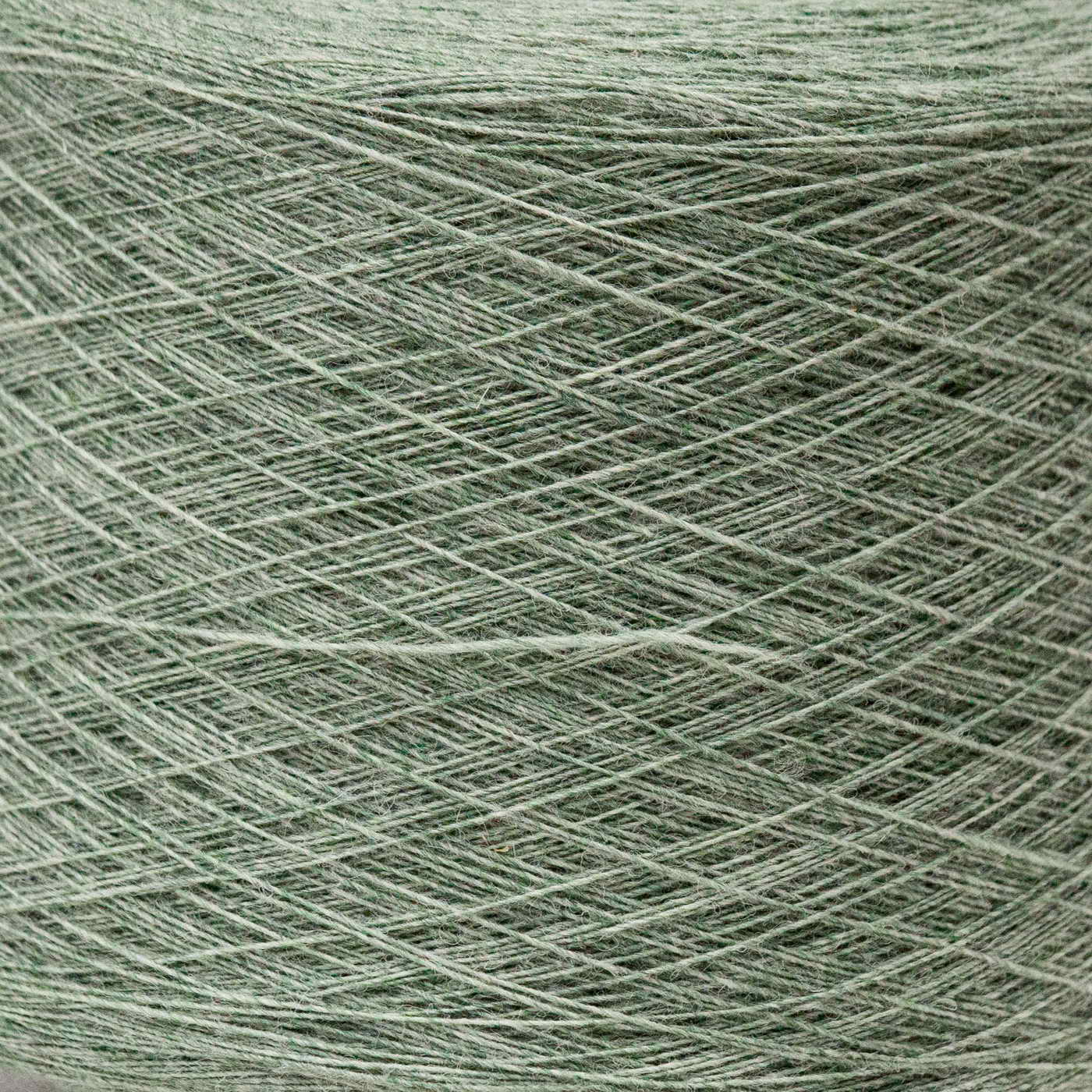
Wool Yarn Melange Single 5.5/1 MACEDONICA
$ 36.53
What is Z-twist yarn? Z-twist yarn is a type of yarn in which the fibers are twisted in a counterclockwise direction, creating a structure that resembles the diagonal stroke of the letter “Z” — running from the lower left to the upper right. The direction of the twist has a significant impact on how the yarn behaves during use, influencing its strength, elasticity, and tactile qualities. In contrast to S-twist yarn, where the fibers follow the diagonal of the letter “S,” Z-twist yarn reacts differently to tension, handling, weaving, or knitting, and settles differently in the finished textile. A key characteristic of Z-twist yarn is its even, stable twist, which holds the fibers together effectively. As a result, the yarn remains soft yet strong — a soft wool that does not break easily — while retaining natural flexibility and a pleasant hand without stiffness or scratchiness. Which projects are best suited for single-ply yarn? Single-ply yarn is made from a single strand of fibers with a defined twist, giving it natural softness and lightness. For this reason, single-ply yarn is particularly well suited for weaving, especially when a supple, flexible fabric is desired. Fine wool yarn works especially well for weaving scarves and shawls, producing lightweight textiles with a soft drape. It is worth noting that in the case of medieval tablet weaving, plied yarn was primarily used for the warp due to its ability to withstand higher tension, while single-ply yarn was more commonly used as the weft. Thanks to proper twist and high-quality fibers, strong wool yarn can also be used for sewing and embroidery, making it suitable for handwork, historical reconstructions, and textile finishing where durability and an authentic appearance are important. How to prepare the warp before putting it on the loom Preparing the warp is a universal process that applies regardless of the type of loom used. Our yarn is already prepared for warping, allowing you to begin the process immediately. First, plan the length and width of the warp, taking into account the number of threads, extra length for tying on, losses during threading, and space for a weaving sample. During warping, it is essential to maintain a warp cross — an intentional crossing of threads that preserves their order and prevents tangling. The threads should be guided with even, moderate tension, as single-ply wool yarn performs best when handled calmly without sudden changes in tension. Once warping is complete, the warp cross should be secured using sticks or slats, and the warp should be loosely tied in several places along its length. Before transferring the warp to the loom, check that the threads are even, untwisted, and that the warp cross is clear and stable. Properly prepared in this way, the warp is ready to be put on the loom, regardless of the loom type. Why choose European wool? European wool combines all the essential properties that make wool such a valued natural fiber: excellent thermoregulation, breathability, moisture absorption, elasticity, and durability. At the same time, it retains a distinctly rustic character — with a more natural texture and visible fiber structure — that sets it apart from highly processed wools. This authentic appearance makes European wool especially well suited for historical reenactment and reconstruction, where material credibility and traditional aesthetics are crucial. It is equally ideal for folk-inspired and traditional projects, where the natural look, tactile depth, and honest character of the fiber play an important role. European wool offers a balance of functionality and authenticity, making it a versatile choice for both practical use and heritage-based textile work.